
If the punchline is exactly what would happen in real life, you may have found an anti-joke. ‘Why did the lamp turn off? Someone pressed the switch.’ The question borrows the rhythm of a riddle; the answer declines to play along. That straight-faced reversal is the point of these deliberately stupid jokes. Here are literal answers, quiet facts, and a few tiny scenes that reward deadpan delivery. They are most fun in small doses: ask the question, pause just long enough to suggest a twist, and give the plain answer without explaining why it is funny.
Questions with embarrassingly direct answers
These borrow the shape of a joke and refuse the usual turn. The surprise is that the answer is correct, ordinary, and somehow offered with great confidence.
- Why did the sandwich go into the lunchbox? Someone was packing lunch.
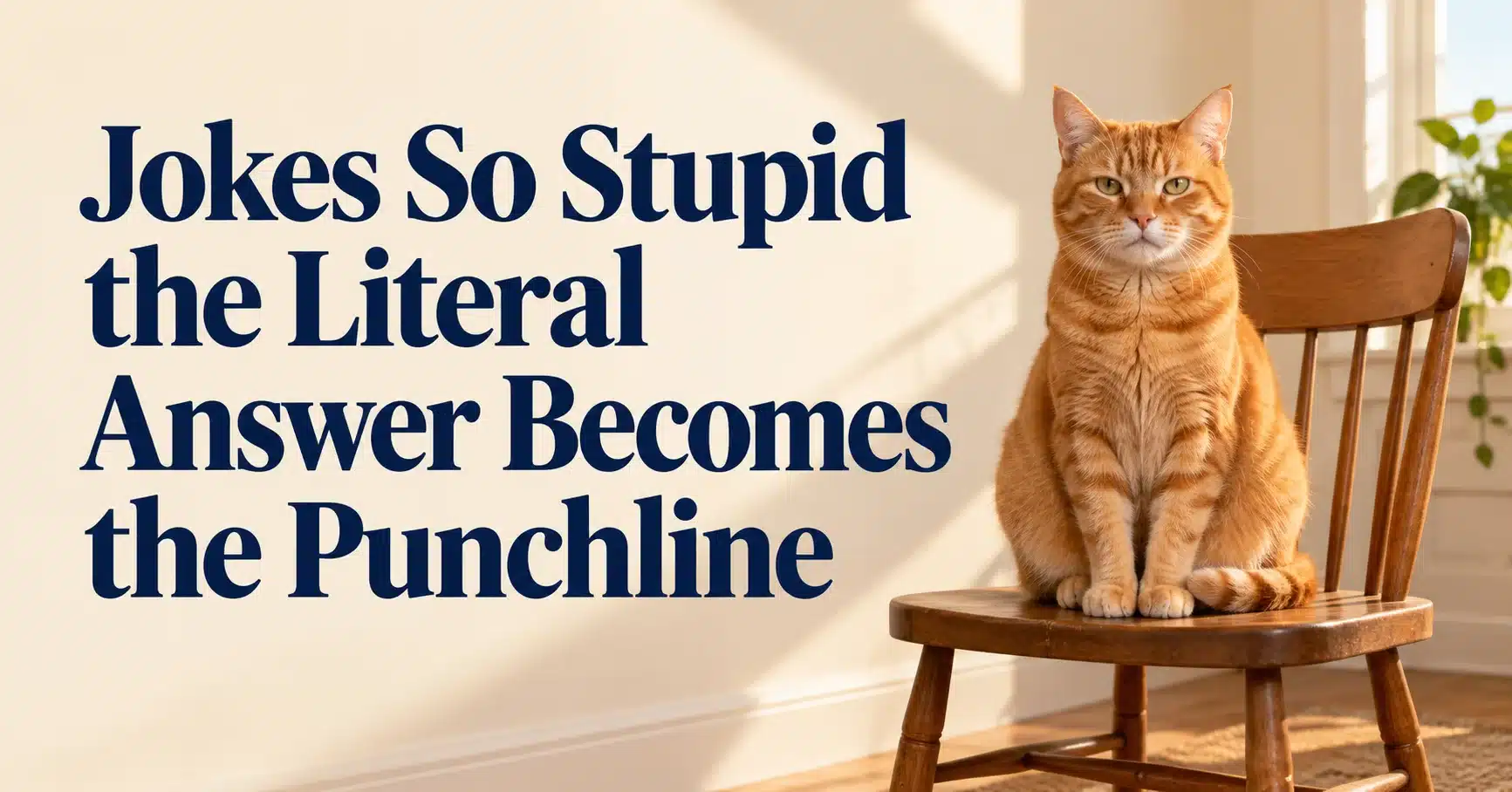
- What do you call a cat sitting on a chair? A cat sitting on a chair.
- Why did the door open? Someone turned the handle.
- What did the clock say at noon? Nothing; it is a clock.
- Why did the pencil get shorter? It had been sharpened.
- What happens when a balloon pops? It stops being a balloon you can use.
- Why was the mailbox full? People had sent mail.
- What did the raincoat do in the rain? Its job.
- Why did the elevator stop at the fourth floor? Someone pressed four.
The trick is to sound as though you are about to reveal something remarkable. A pause before “Someone pressed four” invites the listener to imagine a pun; the plain answer deflates that expectation. Do not add a wink at the end. The deadpan delivery leaves room for the listener to decide whether the anti-joke is brilliant or terrible, which is often the whole point.
Overly serious explanations of very small events
An anti-joke can treat a trivial event like a major report. The more precise the wording, the less dramatic the event becomes. Read one as if announcing breaking news.
- I dropped a spoon. The investigation concluded that gravity was involved.
- The toast was late. It had not been put in the toaster yet.
- My socks were wet. I had stepped in a puddle while wearing them.
- I saw a sign that said “Keep off the grass.” I stayed on the sidewalk and nothing else happened.
- My alarm went off at 7 AM. This matched the time I had set it for.
- The pencil rolled off the desk. It had been left near the edge.
- I misplaced my glasses. They were not where I expected to find them.
- The soup was cold. I had left it out too long.
- My phone battery was low. The number on the screen was small.
This format is strongest when it sounds like a conclusion reached after unnecessary effort. “The investigation concluded…” makes a fallen spoon feel absurdly formal. Use it for a common mishap, not for a real accident or frightening situation. A little inconvenience is safe material; someone else’s trouble is not.
The setup promised a pun; the answer declined
These lines point toward a wordplay punchline, then deliberately step around it. They are an option for an audience that already knows the rhythm of corny jokes.
- Why did the banana visit the doctor? It had an appointment about something unrelated to being a banana.
- What do you call a fish with a briefcase? A fish-shaped illustration with a briefcase.
- Why did the computer go to bed? Its owner shut it down for the night.
- What did the lamp say to the table? Lamps do not generally initiate conversations.
- Why did the baker buy more flour? The bakery had used the previous bag.
- What did the calendar do on Friday? It displayed the date for Friday.
- Why did the broom cross the kitchen? Someone was cleaning the other side.
- What did the tomato say at the meeting? Nothing; it was in a salad.
- Why did the bicycle stop? The rider used the brakes.
The phrasing can make or break this style. “Lamps do not generally initiate conversations” sounds funnier than a blunt “nothing” because it treats the impossible setup as a matter of cautious observation. Vary that voice, though. If every answer says an object cannot talk, the reader knows exactly where the next joke is going. Alternate between a plain physical answer, a bureaucratic explanation, and a person making a reasonable choice.
Tiny disappointments that are harmlessly funny
A mundane outcome can become a punchline when the setup promises a dramatic turn. These jokes are not aimed at a person; they make a show of the small gap between expectation and reality.
- I trained for a marathon of watching movies. The first film was two hours long.
- I opened a mystery box. It contained the item listed on the label.
- I entered a staring contest with a mirror. The result was inconclusive.
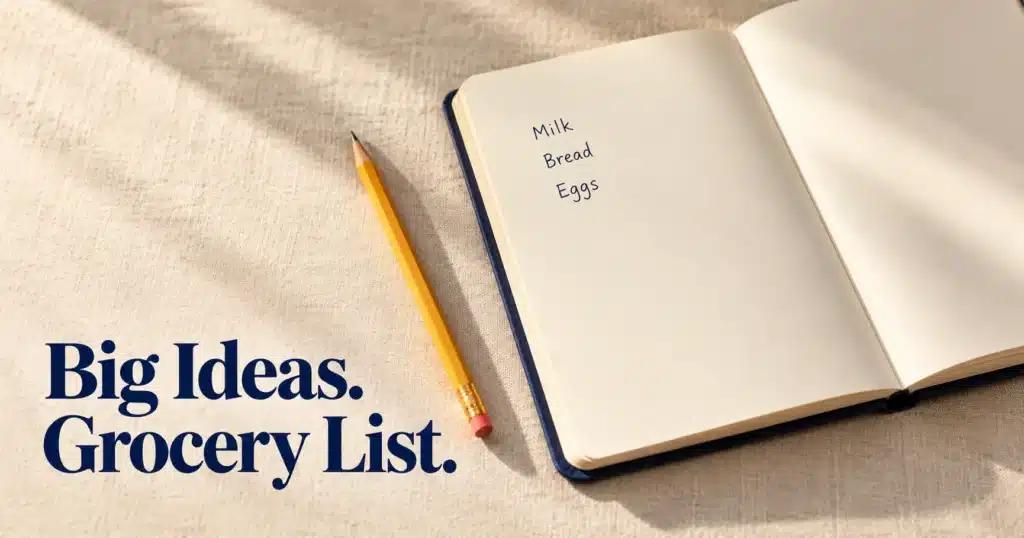
- I bought a notebook for my big ideas. So far it has my grocery list.
- I planned a surprise party for my houseplant. It remained in the same pot.
- I challenged my shadow to a race. We reached the driveway together.
- I ordered an extra-large pencil. It was longer than the regular one.
- I tried to impress my cat with a magic trick. The cat looked elsewhere.
- I took a dramatic photo of my lunch. It still tasted like lunch.
Unlike a classic one-liner, these do not need a pun. They need a disproportionate expectation: “mystery box,” “big ideas,” or “dramatic photo.” The payoff is a normal event. If the setup itself is already boring, the normal ending has nothing to undercut. Put a little promise into the first clause, then keep the second clause stubbornly realistic.
Literal replies to common phrases
Everyday expressions offer an easy route to an intentionally foolish response. The line works if the literal interpretation is instantly visible, even though nobody meant it literally.
- “Give me a hand,” she said. I waved one at her.
- “Hold your horses,” he said. I explained that I do not own horses.
- “Keep an eye on the cake,” they said. I watched the cake from a safe distance.
- “Break a leg,” my friend said. I requested a different kind of encouragement.
- “Take a seat,” the host said. I asked whether I should bring it back.
- “Catch you later,” she said. I hoped she meant conversation, not a sprint.
- “Drop me a line,” he said. I drew a straight one in my notebook.
- “Make yourself at home,” the neighbor said. I asked where the light switches were.
- “See you in a minute,” my friend said. The meeting took considerably longer.
Literal replies can sound like a child learning idioms, but that does not mean the child is the target. The humor is in the phrase, not in mocking someone for misunderstanding it. If you write one, find an expression with a concrete image and have the listener act on that image. Avoid expressions with frightening literal meanings; keep the result harmless.
Two-line anti-jokes for a group chat
A chat message can separate setup and answer with a line break. Send one at a time. The pause created by the screen gives the first line room to sound like a familiar joke.
- I have a joke about a ladder. It is in the garage, and I am not bringing it upstairs.
- A pencil walked into a bar. That would require an animator.
- I asked the fridge what was for dinner. It did not answer, so I looked inside.
- The clock and I had a disagreement. It was about what time I should leave.
- I tried to photograph the wind. The picture showed some moving leaves.
- I wrote “surprise” on a box. Now people know what the box says.
- I opened a book at random. It was on a page.
- I told my shoes a secret. Later, nobody mentioned it.
- My desk lamp has a bright future. It needs a new bulb first.
A group chat may understand an anti-joke faster if the first message resembles a familiar setup. The joke about a pencil walking into a bar signals a conventional punchline, then denies it. The book joke barely offers a setup; it works only with people who enjoy extreme understatement. Choose your audience. An anti-joke is a little social experiment, not an emergency alert.
For kids who enjoy answering “because”
Children often invent direct explanations before adults think of them as anti-jokes. Let them guess, then enjoy their answer even if it does not match yours. These lines are gentle enough for a classroom or car ride.

- Why did the teddy bear sit on the bed? It had been placed there.
- What is in an empty lunchbox? Air, until you put lunch in it.
- Why did the kite go up? The wind and the string helped.
- What did the crayon draw? Whatever the person holding it decided.
- Why did the dog bark at the door? It heard somebody outside.
- How did the paper airplane cross the classroom? Someone threw it.
- Why was the sidewalk wet? It had rained.
- What did the book do at bedtime? It stayed on the shelf.
- Why did the cookie disappear? Somebody ate it.
Use these as an invitation to play with expectation, not as a quiz with one correct answer. A child may invent a silly pun that beats your literal punchline. Follow it. Explaining that the joke was “supposed to be bad” can take the fun out of a child’s answer. The best exchange is often the one that changes directions.
When the punchline is just a quiet fact
An anti-joke can be almost aggressively plain. The setup carries the energy and the answer lets it down gently. Mix these with brighter jokes instead of making them the entire conversation.
- A person walked into a library. They wanted to borrow a book.
- Two pencils were on a desk. One was shorter because it had been used more.
- I went outside to look at the moon. It was visible.
- The bus arrived at the stop. Several people got on.
- I asked for a glass of water. Someone brought me one.
- My shoes were by the door. That is where I left them.
- A bird landed on the fence. Then it flew away.
- I bought a calendar. It had twelve months printed in it.
- The lights went out. Someone had flipped the switch.
The plainest lines are funniest when introduced with a little too much ceremony. Try “I have been saving this one” before the bus joke, then deliver it as though it were the final reveal of a mystery. Do not do that to someone who is busy or upset; the joke asks the listener to share a very particular kind of patience.
Why an anti-joke works when it works
Most jokes teach an audience to expect a surprising explanation. An anti-joke uses the same setup but declines to reward that expectation in the usual way. The listener laughs at the shape of the exchange, the excessive seriousness, or the fact that they imagined a punchline that never came. A plain answer is not automatically funny. It needs a setup that invites a more imaginative one.
You can build one by writing a classic-looking question, then answering it as a practical person would. “Why did the bicycle stop?” can be answered with a pun about being tired, which is familiar. “The rider used the brakes” is an anti-joke because it insists on the normal physical cause. The setup still matters: a bicycle stopping is an action readers can picture. If you ask why a random spoon exists, the plain answer may not create enough expectation to undercut.
Another route is overprecision. “The apple fell because of gravity” is a fact; “After reviewing the evidence, the kitchen concluded that gravity was involved” turns the fact into an unnecessary investigation. The extra formality is the comic move. Keep the subject trivial and the report brief. A real illness, injury, or financial loss does not become funny merely because you describe it like a memo.
The best anti-jokes also know when to stop. Do not add “That is the joke” or explain that the answer was literal. The pause gives the audience time to notice their own expectation. If someone responds with “That was stupid,” you may have delivered exactly the kind of humor they were ready to share. If they look confused, switch to another style rather than defending the format.
Five anti-joke formats and when to use them
The most direct format is a question with an ordinary answer. “Why did the bus stop?” “It reached a bus stop.” That is almost too plain, which can be the attraction. The question makes the listener wait for wordplay; the answer refuses to supply it. Use this format with someone who already understands classic Q&A jokes. If the person expects a factual explanation, the line may never register as humor. Tone and timing supply the frame.
A second format is the overinvestigated event. Give a dropped spoon, missing sock, or cold cup of coffee the language of a serious report. “After reviewing the kitchen footage, we determined I left the toast in the toaster.” The joke is the disproportionate effort. Do not use a real emergency or another person’s embarrassing mistake. Keep the “investigation” focused on a small event that costs nobody more than a minute.
A third format is the literal correction. A phrase such as “The pencil walked into a bar” can be answered with “It did not; pencils do not walk.” This has a dry rhythm, but it becomes predictable fast. Vary the correction: perhaps the pencil was carried in a pocket, or perhaps the story is an animated film. Either way, the answer should be a normal explanation that drains the imagined cartoon of its magic. One correction is usually funnier than three in a row.
A fourth format puts unnecessary confidence behind a trivial announcement. “I have discovered that the refrigerator light turns on when I open the door.” The content is ordinary, but the speaker behaves as though they have reached a breakthrough. You can sharpen it by adding a specific detail: “I conducted a five-minute investigation into the missing pen. It was under the notebook.” Avoid doing this with a discovery that could actually surprise the audience; then you have a fact, not an anti-joke.
The fifth format is a story with a deliberately small ending. “I went to the store for milk. They had milk.” A longer setup can build more expectation, but a long walk to a plain answer often feels like wasted time. Add only one detail that makes the listener anticipate a twist, then give the ordinary result. The dryness should be a choice, not a failure to edit.
A short exercise in reversing expectations
Write a conventional setup: “Why did the umbrella open?” List three imaginary pun answers, even if they are bad. Now set them aside and answer as a practical person would: “Because it started raining.” That is the basic anti-joke. To give it more character, put the practical answer in a needlessly official voice: “According to the weather report, rain had begun.” The setup remains recognizable, but the delivery has a new angle.
Try the same process with a human choice. “Why did I sit in the back row?” The literal answer may be “There was an empty seat.” That is not always funny because there is little promise in the question. Make the setup sound like a confession or mystery: “I have never told anyone why I chose the back row at the movie theater. It had the seat I bought.” The added ceremony creates expectation. The answer becomes a purposeful letdown.
Now test the joke on paper without saying “This is an anti-joke.” If the reader can recognize the turn, keep it. If they cannot tell where the joke ends, shorten the answer or add a clearer setup. Anti-jokes are not permission to publish every mundane sentence. They work because the familiar joke form makes the mundane sentence arrive at a surprising time.
One useful editing test is to ask whether an ordinary answer would be truly obvious to the listener. “Why was the sidewalk wet? It had rained” is immediate. “Why did the museum close on a Tuesday? It had a maintenance schedule” may require knowledge nobody has, so the plain answer feels arbitrary. Choose situations people can picture. The humor should not depend on specialist knowledge or a hidden fact.
Twenty questions answered with no imagination at all
The question sounds as if a wild punchline is coming. The answer refuses to cooperate. Read these with a straight face and resist adding “get it?” afterward.
- Why did the lamp turn off? Someone pressed the switch.
- What did the sandwich do at noon? It was eaten for lunch.
- Why was the hallway quiet? Nobody was in it.
- What did the cat see through the window? Whatever was outside.
- Why did the pencil get shorter? It was used and sharpened.
- How did the guest find the door? It was at the front of the house.
- What happened when the kettle boiled? The water got hot.
- Why did the umbrella open? It started raining.
- Where did the missing sock go? We still don’t know.
- What did the calendar do on Friday? It showed Friday.
- Why did the plant lean toward the window? That’s where the light was.
- What happened when the train arrived? People got on and off.
- Why did the phone make a sound? A notification came in.
- What did the clock say at midnight? Nothing; it has no voice.
- Why did the dog carry a stick? It had picked up a stick.
- What did the shopper buy at the bakery? Bread.
- Why did the book close? Someone shut it.
- Where did the bus go after the stop? To the next stop.
- What did the waiter bring with the soup? A spoon.
- Why did everyone look up? Somebody asked them to.
A literal answer is not automatically funny. The setup has to suggest a riddle, and the answer has to land fast. One or two at dinner can create a running bit. Twenty in a row will teach everyone the trick, so let the collection be a menu rather than a script.
A small deadpan performance exercise
Write an ordinary question that sounds as though it deserves a dramatic answer: “What happened when the chair disappeared?” A conventional joke might build toward a pun. An anti-joke can answer, “We looked for another chair.” The answer is funny only if the speaker has created just enough expectation. If you preface it with “This is an anti-joke,” the listener already knows the trick.
Try three delivery styles. First, read the question with theatrical suspense and the answer plainly. Second, read both parts in the same calm voice. Third, make the question as casual as a real inquiry. Different rooms will respond differently. Some enjoy the huge gap between suspense and ordinary reality; others prefer a dry statement that almost slips by. Choose the rhythm that feels natural to you.
An anti-joke should not suggest that a serious question has a comic answer. If someone asks for real help, respond directly. Deadpan works when the audience recognizes a playful frame: a joke game, a friendly exchange, or a written collection. It also works better in small doses. After one literal answer, a second may still surprise; after twenty, the listener can predict the mechanism and stop offering the question its imagined stakes.
To write a fresh one, do not copy an old riddle and replace the animal. Think of an everyday action with a tiny problem: a sandwich is missing, a plant needs light, a person forgot an umbrella. Ask a question that invites a large explanation, then answer with the smallest true step. Cut anything that comments on how unfunny it is. The straight face is already doing that work.
An anti-joke also changes when the audience has heard the format before. The first literal answer surprises because a riddle usually promises an imaginative turn. A tenth literal answer may feel like a routine. Break the sequence with a different kind of joke or end the game while people still enjoy predicting what might happen. Deadpan is a timing choice as much as a writing style. You can make an ordinary fact funny by placing it after a deliberately heightened question, then trusting the silence after the answer. The listener completes the contrast without a spoken explanation.
In print, a deadpan answer can benefit from a line break between question and response. In speech, a pause supplies that space. Neither needs a label announcing that it is an anti-joke. Let a reader or listener briefly expect a twist, then give the ordinary answer. The small delay is part of the design; the plain sentence does the rest.
Frequently asked questions
What is an anti-joke?
An anti-joke uses the setup of a conventional joke but answers literally or in a deliberately ordinary way. The humor comes from the gap between the expected punchline and the plain response. It is not simply a random sentence; the setup must create an expectation worth reversing.
How is an anti-joke different from a pun?
A pun turns on a word with two meanings or a similar sound. An anti-joke often rejects that sort of clever turn and gives the practical answer instead. Both can be short and clean. They reward different audience expectations, so a mixed list can be more enjoyable than either style repeated indefinitely.
Are literal jokes suitable for kids?
Yes, especially when the objects and actions are familiar. Kids may also invent answers that are funnier than the one on the page. Let them play with the question rather than insisting on a predetermined punchline. Avoid using the joke to make fun of someone who misunderstood a phrase.
Why do people call these jokes stupid?
The label usually means the joke has an intentionally simple or underwhelming payoff. A listener expects a clever answer and receives an obvious one. The pleasure is in the deliberate mismatch, not in insulting the person who told it or heard it.
How should I deliver an anti-joke?
Read the setup as if a normal punchline is coming, pause, and give the plain answer without announcing the trick. One is usually enough at a time. If the audience enjoys it, they may start proposing their own overly literal answers.
Can an anti-joke be a one-liner?
Yes. “I opened a book at random. It was on a page” sets up a tiny event and ends with an absurdly unhelpful fact. A Q&A format makes the expectation clearer, but a single sentence can do the same work if the first clause promises something interesting.
Where should I share these jokes?
Use them with friends who enjoy deadpan humor, in a low-stakes group chat, or as a quick spoken joke. They are less useful in a serious conversation or a setting where the listener has to solve the joke while handling other tasks. A little awkwardness is part of the style, but timing still matters.
How do I write an original one?
Start with a vivid setup that resembles a classic joke. Write the most practical answer, then decide whether a touch of unnecessary formality would make it funnier. Read it aloud and remove any explanation after the answer. If it sounds like a well-known line you have heard before, change the setup rather than swapping only one word.
Let the plain answer do the work
Literal jokes are funny because they confidently refuse to be the clever joke you expected. Choose a setup your listener can picture, keep the answer short, and resist explaining it afterward. A few anti-jokes can be a playful change of pace among puns and one-liners. If a friend responds with a more elaborate punchline, you can answer with an even more boring fact. That back-and-forth is often more entertaining than a long list read in order.

