

A New Year pun one-liner should fit in one breath. It might give the calendar a new chapter, let the party hat request overtime, or put the first cup of coffee in charge of January. The turn is short enough for a text and clear enough to say aloud. This set separates countdown energy from the slower first morning and from the first day back at work, because the same sentence will not sound right in every setting. Choose the line that matches the moment, then stop before you explain it. A private message can add a personal sentence after the joke; a caption can let the photo supply the setup.
Midnight in one sentence
The last minute of the year is noisy. These lines are brief enough to say once, smile, and make room for the countdown.
- The clock has been practicing this entrance for twelve months.
- Midnight arrives precisely when it means to make a scene.
- The old year has checked out; somebody find the confetti receipt.
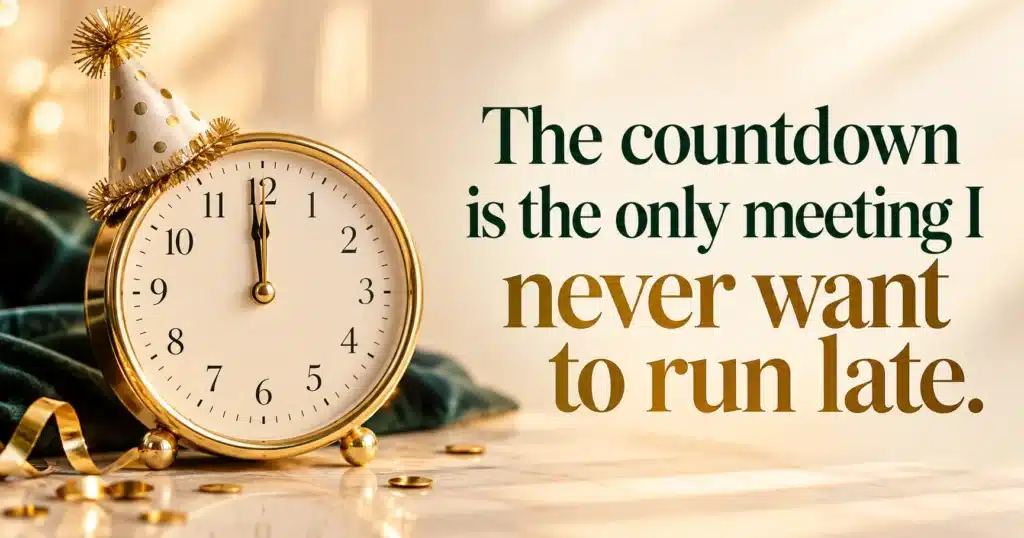
- The countdown is the only meeting I never want to run late.
- The party hat is taking the transition very seriously.
- My calendar is about to turn over a new leaf of paper.
- The year is almost up, but the snacks are holding steady.
- I have ten seconds to finish every unfinished plan from last year.
- The clock hands are applauding in their own slow way.
- At midnight, even my planner will pretend to be spontaneous.
One-line humor needs a clear noun before the twist. A party hat, clock, calendar, or snack table gives the listener a picture. The line about unfinished plans is exaggerated but harmless; it does not pick at anyone’s real goals. Do not interrupt the actual countdown to explain a wordplay connection.
The morning after the countdown
A January 1 line can be gentler, especially in a text. It may reach someone who stayed home, worked overnight, or went to bed early. None of those choices needs to be the joke.
- January has arrived with a clean page and no pen instructions.
- My first plan of the year is to find the coffee.
- The calendar changed overnight; the laundry showed remarkable loyalty.
- This new year and I are easing into the conversation.
- I am starting fresh with the same reliable breakfast.
- My planner says “go”; my slippers request a slower launch.
- The first morning is asking for patience and a second cup.
- The year is one day old and already wants a snack break.
- New dates, familiar friends, excellent arrangement.
- I am giving this year a little time to introduce itself.
The wording after a celebration can be ordinary. A friend may appreciate “Hope the morning is kind to you” more than a joke about partying. If you do use one of these, pair it with a personal sentence rather than a mass-forward greeting. Short does not have to mean impersonal.
Calendar and planner wordplay
Dates, pages, squares, schedules, and margins create several kinds of wordplay. Keep each line on one idea; piling all the terms together makes a caption feel like an SEO list.
- My calendar wants to meet more good people on its new dates.
- I turned the page, and the to-do list followed me.
- The planner has blank squares and very high hopes.
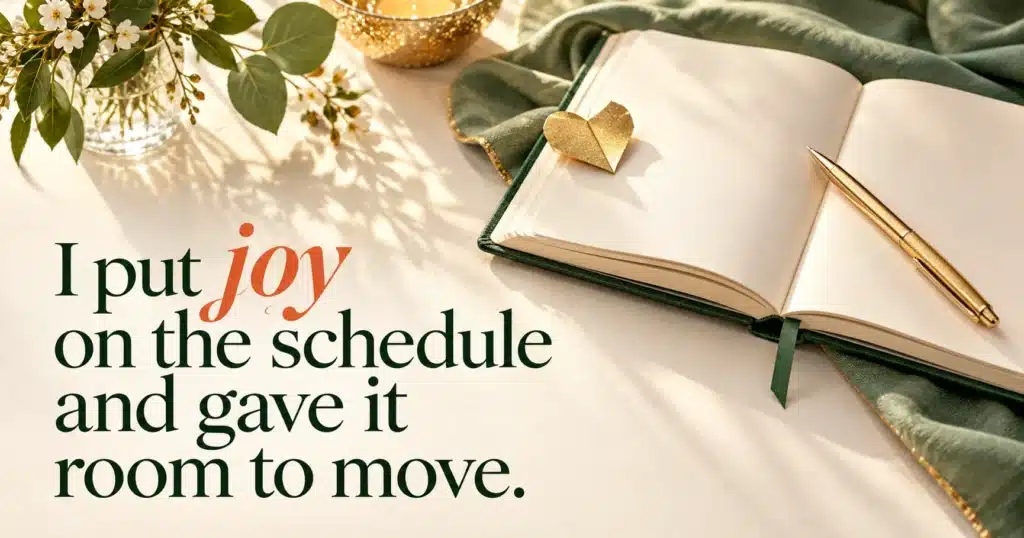
- I put joy on the schedule and gave it room to move.
- The calendar is open to suggestions, especially lunch dates.
- My next chapter has a coffee stain on page one.
- The new page looks brave; I have not written in it yet.
- I have penciled in more time for the people who show up.
- The margins are where this year’s best stories may hide.
- A clean slate is nice, but I would also accept a clean kitchen.
Some are wishes, some are observations. The lunch-date line can be flirty or friendly depending on who receives it. The clean-kitchen line suits a casual caption, not a formal greeting card. That is the value of short lines: you can select a tone without rewriting a paragraph.
Resolution humor without teasing a person
Goals are personal. These one-liners aim at the speaker’s own habits or at harmless objects, not at a friend’s body, finances, or motivation.
- My resolution is to give the snooze button an honest hearing.
- The notebook wants ambitious plans; the couch would like a vote.
- I set a goal to be punctual, starting after this coffee.
- My list of goals now includes making a shorter list of goals.
- The water bottle has appointed itself head of gentle reminders.
- I resolved to take breaks; my desk chair endorsed the motion.
- The calendar asked for a five-year plan, so I offered Friday.
- My walking shoes are lobbying for more outdoor meetings.
- I promised to read more; the bookstore immediately sent an invitation.
- The first goal is realistic: find where I put the goals.
A joke about a resolution should not demand that anybody else disclose theirs. A person’s goals may be private, and the New Year is already full of unsolicited advice. Self-directed silliness keeps the line shareable. If you make a toast about someone else’s resolution, ask first or choose a different subject.
Party food and leftover lines
A snack photo makes a useful setup. Keep the pun tied to the actual food or the next morning’s leftovers.
- The dip has a new outlook and a full bowl of chips.
- Our sparkling cider is bubbly about the calendar change.
- The cookies made a sweet first impression on the year.
- The cheese board says maturity can be delicious.
- The pretzels are twisted with anticipation.
- The leftover pizza has volunteered for January’s opening shift.
- The cake took a slice out of the old year.
- The snack table has excellent plans for a midnight meeting.
- The fruit tray wants to start fresh without giving a speech.
- The punch bowl insists its best lines are still ahead.
A food pun is a decoration, not a substitute for a useful label. At a party, guests may need to know what is in a dish. Put the joke where it does not hide that information. On social media, the photo should match the food in the line; a pretzel pun under a photo of cake looks borrowed.
For work on the first day back
A one-liner in a team chat should be easy to ignore and safe to share. These do not pretend everyone has the same schedule or holiday plans.
- The inbox has celebrated the new year by multiplying quietly.
- The office plant wants a brighter quarter and a window seat.
- My mug and I are aligned on today’s most urgent agenda.
- The planner has fresh pages; the printer has its usual opinions.
- I hope the first meeting leaves room for a second cup.
- The sticky notes have opened the year with bold ambitions.
- Our whiteboard has erased last year without asking permission.
- The break room is accepting coffee-based strategic proposals.
- My keyboard is ready to start a new sentence after lunch.
- The office clock recommends a timely return to snacks.
Work-safe humor depends as much on timing as content. In a casual channel after a break, a printer line can bring a smile. In a project escalation thread, even a clean pun may obscure the needed information. Send the joke where the group is already chatting, not where somebody needs a decision.
Texts to someone you actually know
A short pun becomes personal when it includes a shared plan or familiar habit. These leave room to add a name, place, or date.
- I have saved a square on the new calendar for our next walk.
- The year is new, but our coffee order knows the routine.
- Our next chapter should have at least one excellent road trip.
- I am scheduling another dinner where we talk past dessert.
- The planner has room for a visit; I hope yours does too.
- The first good date on my calendar is the one with you.
- Let us give the year a few stories only our group would understand.
- The new page looks better with your name in the plans.
- I hope we keep making time for the unplanned conversations.
- Here is to a year of jokes we will quote at the wrong moment.
Do not copy a romantic line into a message for a colleague. “The first good date is the one with you” can suggest more than a friendly lunch. Choose the relationship before choosing the wordplay. A short text can be warm, playful, or professional, but it should not confuse the person receiving it.
Caption lines for a visible moment
These fit a specific kind of image. Use one with a photo that supplies the context; the reader should not need a paragraph to know why the pun is there.
- Confetti on the floor, good company in the frame.
- The calendar turned; the dance floor needed one more song.
- First coffee of the year, already setting the standard.
- The party hat retired with a strong record of service.
- Midnight looked better from this table.
- The first sunrise has entered the chat without an alarm.
- A new chapter, and the group photo is still blurry.
- These leftovers deserve a second round of applause.
- My January walk came with a fresh set of footprints.
- The clock struck twelve, and we kept the conversation going.
A caption about a group photo should not reveal someone’s private plans or tag them without permission. The safest joke is often about the visible props: confetti, hat, coffee, or the clock. Keep the line readable on a phone screen and let the image do half the work.
Shorter is a writing choice
To make a one-liner, start with a sentence that contains the whole scene. “The calendar changed its dates overnight, and I woke up to find a new month and a bunch of old errands” has two ideas. Decide whether the joke is about dates or errands. “New dates, old errands” is short but barely a joke; “The calendar changed overnight; the laundry declined” has a clearer contrast. Read it aloud. If the last clause carries the surprise, move it to the end.
Use a word with two natural meanings rather than forcing a strange spelling. “Date” can refer to a calendar entry or a meeting. “Page” can be paper or a chapter in a story. “Countdown” can be a party ritual or a way to mark time. A good line needs only one of those bridges. If it uses three, the reader may notice the construction instead of the joke.
A one-liner for a caption and a one-liner for a toast have different tests. A caption can lean on a photograph; a toast must be understood aloud in a noisy room. A printed card may be read days after the holiday; avoid a joke that only works during the final ten seconds. A text should not require a response. The word count may be the same, but the job is different.
Finally, check originality. “New year, new me” is so familiar that adding one extra word rarely makes it feel fresh. Look at what actually happened: a party hat fell off, a friend stayed to help clean up, or your first morning was quiet. The most useful line may be a precise observation with one playful turn. You do not need to announce a brand-new identity to celebrate a new date.
A one-liner for the right New Year moment
A line in a New Year card has a different job from one tossed across a noisy room. In a card, readers can pause over a double meaning, so a small visual trick may work. At a party, the listener needs to hear the turn on the first pass. In a family group chat, the line should be warm enough for the relatives who did not stay up. This is why a collection is more useful when it supplies settings rather than declaring one pun universally best.
Before midnight, choose a line about anticipation. The clock, a party hat, or a waiting snack makes the joke feel attached to the event. The last ten seconds are too valuable for a long punchline. After midnight, switch to beginnings: a fresh page, a first cup of tea, or an overambitious planner. The same line can feel early at 10 p.m. and charming at breakfast. Timing gives a sentence half its meaning.
Consider the channel as well. A photo of a sparkling drink allows a caption to omit the obvious setup. A text without a photo needs its own context. “The calendar is fully booked with possibilities” can stand alone; “Ready for round two” might refer to anything. If a line needs a second explanatory message, it is probably better as a longer greeting than a one-liner. Keep the joke intact, then add a genuine wish if you want a more personal note.
A workplace message should have a useful first sentence. Say when the team returns or what the plan is, then add one clean line if the culture suits it. No pun should force colleagues to guess a deadline. In a classroom, a short line about a calendar or pencil is easier for children to retell than a reference to adult resolutions. A caption for a quiet celebration can avoid the assumption that everyone throws a big party. “The first page looks peaceful” may be more accurate than a confetti joke.
Make three versions from one observation
The most reliable source of original wordplay is something that actually happened. Suppose you find one piece of confetti under the sofa on January 3. Write the plain observation first: “There is still confetti under the sofa.” Now decide what the confetti wants in a comic version. It could be waiting for an encore, refusing to leave the party, or marking a tiny celebration of its own. Each version has a different attitude. Choose one, and put its surprise at the end.

Another example is an overfull January calendar. A weak line merely calls it busy. A more focused line gives the calendar a human complaint: it asked for a fresh start and got booked solid before lunch. The scene is familiar, but the complaint is specific. If you instead write five calendar lines about “new dates,” they will feel like one joke repeated with different punctuation. Keep the best turn and move to another subject.
The same method works with a leftover party hat. Ask what a hat would do on the morning after: retire, request another shift, or hide from the cleanup. Pick the image the reader can picture most easily. A sentence such as “The party hat has requested a quieter assignment for January” needs no second line. It has a setup, a personality, and an ending. It also works better after the party than before it.
Revision can be as simple as deleting the extra sentence. “My planner wants a fresh start, but it already has too many appointments, which is funny because planners have appointments” explains the mechanism. End at “appointments.” A pun is not improved by announcing that it is a pun. If two different readings are available, the reader can do the last bit of work and enjoy the discovery.
How to select a line for a greeting
Start with the recipient. A friend who enjoys a silly text may like a deliberately groan-worthy line. A colleague may prefer a quick, neutral turn about coffee or calendars. Someone entering a difficult year may need a straightforward wish and no joke. It is considerate to choose tone according to the relationship, rather than sending the same pun to everyone on the contact list.
Then read the message as a whole. “Happy New Year” followed by five puns can sound like a performance. One line followed by a memory or hope has a better rhythm: a little levity, then a human connection. You can refer to the trip you enjoyed together, the meal you want to make, or the simple hope that you will see each other soon. Specific wishes do not need to be grand. They are what makes a brief greeting feel addressed to a person.
For social media, think about the picture’s details. A calendar photo calls for a date or page line. A kitchen photo can use leftovers or breakfast. A group photo should celebrate the people rather than treat them as props for a generic pun. If the best line is unrelated to the image, write a direct caption instead. No cleverness is required to make a moment worth sharing.
Finally, use the year number sparingly. A pun built around the current number may expire in twelve months and can be hard to understand outside a specific date. A clean sentence about the first morning, a blank page, or a shared hope remains useful. The occasion is already clear from the message or photo; you do not have to say “New Year” three times for the reader to know why you are writing.
One breath, one New Year thought
These lines are meant to travel alone in a text or sit below a picture. Each has a single turn; none needs a second message explaining the joke.
- The calendar opened a new chapter and immediately misplaced its bookmark.
- My party hat has a first-day-of-the-year hangover from being interesting.
- Midnight gave the clock a standing ovation and went back to sitting down.
- The confetti filed an application to stay through spring cleaning.
- My planner wants a fresh start and a less ambitious owner.
- January knocked, and my slippers answered.
- The last slice of cake crossed the year line without a passport.
- My alarm set a goal to become more understanding; we begin negotiations Monday.
- The coffee mug has agreed to handle the first morning shift.
- The new page looks promising, provided I can find a pen.
- My resolution bought running shoes, then asked for a chair.
- The couch and I have a very relaxed plan for January 1.
- The party lights blinked at midnight like they knew a secret.
- I made room for new memories by losing last year’s receipts.
- My first schedule change was moving breakfast to later.
- The clock turned twelve, and every snack suddenly became a leftover.
- The calendar offered me 365 chances and one very crowded Monday.
- Our countdown reached zero; the kitchen cleanup started at ten.
- My favorite fresh start came with warm toast and no agenda.
- The greeting card says “new beginning,” but my dog says “same walk.”
For a text, add the person’s name or a genuine wish. For a caption, pick the object in the photo. The one-liner can be playful while the rest of the message sounds like you.
A three-message sequence for the holiday
On New Year’s Eve, send a brief greeting to someone you know well: a line about the countdown followed by “I hope I see you soon.” On January 1, a different person might receive a quiet morning line and a genuine question about their plans. Later in the week, a friend returning to work may appreciate a calendar joke and an offer to meet for lunch. These are different moments, not three versions of the same broadcast.
If a friend replies with their own pun, follow their lead. If they reply with serious news, drop the wordplay and respond to what they said. A joke is an opening to connection, not a script that must continue. That flexibility is part of good humor and good friendship.
For a public post, one line can stand alone. For a private greeting, one line usually needs a human sentence beside it. The difference is small but important: a caption entertains whoever sees it; a message tells a particular person you thought of them. Let the line serve that purpose.
There is no need to package every New Year line as a promise. A new calendar page can inspire hope, but a friend may be facing uncertainty. A modest wish for a peaceful week or more shared meals can feel more personal than a slogan about transformation. A one-liner can still make the message light: place it before the sincere sentence and let the sincere sentence stand without another joke. The result is brief enough for a text and specific enough to sound like you. If the pun obscures what you want to say, keep the wish and omit the pun.
One final practical idea: save the line with a note about the situation where it worked. A calendar pun that earned a laugh in a first-day-back chat may be right next January; a confetti line belongs to a specific photo. The note will help you choose rather than repeat a favorite everywhere. Good one-liners are portable, but they are not context-free. A little attention to time, picture, and recipient does more for a joke than another adjective in the punchline.
A short line can also serve as a reply rather than a post. When a friend shares a picture of leftover decorations, respond to that detail instead of sending a prepared calendar joke. Their image gives your sentence its setup, and the exchange feels like conversation. Save broad lines for moments without a specific scene.
Frequently asked questions
What is a New Year pun one-liner?
It is a single sentence that uses a double meaning, sound, or playful contrast tied to New Year. The setup and payoff appear together, so the line works in a text or caption without a separate answer. Short does not mean vague; the reader still needs a recognizable image or idea.
What are some clean New Year one-liners for kids?
Lines about clocks, calendars, party hats, and snacks are easy to picture. A child may enjoy inventing a different ending after hearing yours. Avoid complicated spelling puns that only make sense on a screen if you plan to tell the joke aloud.
Can I use a one-liner in a greeting card?
Yes, especially as a closing after a sincere sentence. The joke should not replace the entire message to someone close to you. Mention a shared plan or memory, then finish with a brief playful line that fits your relationship.
What works best in a New Year’s Eve caption?
Choose a line that matches the visible photo. Confetti, a party hat, a clock, and a group portrait support different jokes. A caption that is clear without private context is easier for other readers to enjoy.
How do I avoid making a resolution joke mean?
Aim the joke at your own harmless habit or at an object such as a planner, not at someone else’s body, health, finances, or private goals. Keep the line optional and brief. The holiday is not a license to evaluate other people.
Should a one-liner mention the year number?
Usually it does not need to. A line about a calendar, first morning, or countdown stays usable across years. Include the number only when the joke genuinely depends on it, and check that the math and timing are correct.
How many one-liners should I send at once?
One is usually enough. A single clear line can get a smile in a text or chat; a long string may feel like a performance. Save the others for different moments, and follow the conversation if the recipient replies seriously.
What makes a pun sound natural?
The wordplay should grow from a real object or situation rather than a forced misspelling. Read it aloud. If the line needs an explanation or does not fit the audience, revise the setup or choose a simpler double meaning.
Give one line the whole moment
The best New Year one-liner has one job: a quick smile in a toast, text, caption, card, or casual work chat. Pick the image or relationship first, then choose a line that belongs there. A fresh calendar can support a joke about dates; a party photo can carry a confetti line; a quiet January morning may need only a warm wish. Keep the turn easy to hear and the greeting kind. You can save the rest of the list for later in the year.

