

A quiet breakfast on January 1 and a crowded countdown party need different jokes. The first might call for a slipper that refuses to leave the house; the second has a clock, a snack table, and an audience already counting. This roundup of New Year jokes follows the night from the first arrival to the cleanup, with clean lines for kids, friends, coworkers, and cards. ‘Best’ here means best for the moment: short enough to hear, kind enough to share, and easy for someone else to answer. Take the ones that fit your room and leave the rest for another gathering.
A welcome joke before anyone knows everyone
Early in a party, the joke should ask for no inside knowledge. A short question and answer gives newcomers a way to join the mood.
- Why did the doormat attend the New Year party? It wanted to welcome a new chapter.
- What did the coat rack say at the door? “Hang around; the year is almost here.”
- Why did the invitation bring a pencil? It expected a change of plans.
- What did the party hat say to the shy guest? “You can sit with me; I am new here too.”
- Why was the snack bowl a good greeter? It always made room for one more.
- What did the doorbell announce at eleven? “The future is ringing.”
- Why did the name tag feel hopeful? It was ready to make a fresh impression.
- What did the host say to the empty chair? “You have a promising year ahead.”
- Why did the umbrella join the winter party? It heard the forecast called for a shower of confetti.
- Why was the hallway so cheerful? It knew the best conversations start on the way in.
Do not demand that a new guest perform. A joke can start a casual exchange, but an introduction is more useful: tell two people why they might enjoy talking. If a line earns a smile, move on. Ten jokes in a row at the door would slow the party down.
Countdown jokes with a little suspense
The clock provides a shared setup. Keep the punchline short; nobody wants to miss midnight while you tell a long story.
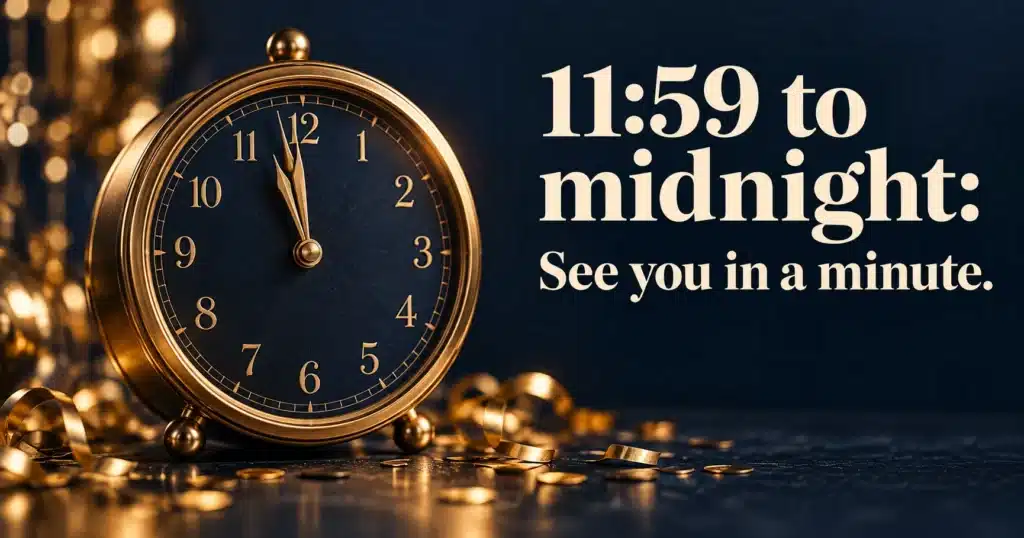
- Why did the clock refuse a long speech? It was seconds away from something better.
- What did eleven fifty-nine tell midnight? “I’ll see you in a minute.”
- Why did the countdown need a ladder? Its excitement kept climbing.
- Why was the stopwatch so calm? It knew exactly how to spend the final seconds.
- What did the bell practice all evening? Its big finish.
- Why did the last minute ask for quiet? It wanted to hear the room count it out.
- What did the calendar say as the clock struck twelve? “My turn.”
- Why did the party lights blink at midnight? They were trying to wink at the future.
- What did the confetti say before it fell? “This is my moment to shine.”
- Why did the noisemaker stop for one second? Even it wanted to hear the first cheer.
A countdown is already a strong group activity. Tell a joke several minutes before it begins, or use a one-sentence line after the cheer. Give the actual countdown priority. If a venue has a different schedule or an early child-friendly celebration, use the clock in front of you instead of pretending it is midnight.
Resolution jokes that are kind to the maker
Resolutions are easy targets, especially when people announce ambitious plans. These lines aim at ordinary planning rather than anyone’s body, health, or finances.
- Why did my to-do list buy smaller shoes? It wanted to take baby steps.
- What did the notebook say to a new habit? “Let’s start with one page.”
- Why did the planner ask for a break? It had already booked every minute of January.
- What did the water bottle tell the resolution? “I’ll be here when you’re ready.”
- Why did the walking shoes take a photo? They wanted proof of the first step.
- What did the alarm clock promise? “I will try to be less surprising.”
- Why did the bookshelf make a reading plan? It was ready for a new chapter.
- What did the savings jar suggest? “Let’s start with the change we have.”
- Why did the sticky note choose one goal? It didn’t want to lose its grip.
- What did the calendar tell an overfull plan? “Leave a little room to live.”
A host can invite guests to share a small thing they look forward to rather than asking for public resolutions. Some people love goals; others prefer a quiet beginning. A self-directed joke about an overfull planner is safer than predicting that a guest will quit a habit.
Dinner table jokes served in small portions
A meal gives you props, but the food and the people deserve more attention than your joke list. Drop one line while a dish is being passed.
- Why did the dinner roll want a midnight toast? It had risen to the occasion.
- What did the soup ask the new year? “Can we take this slowly?”
- Why did the sparkling water laugh? It was full of good spirits.
- What did the serving spoon say to the bowl? “Here’s to another round.”
- Why did the napkin get invited back? It always cleaned up after a party.
- What did the dessert plate wish for? A sweet beginning.
- Why was the kitchen timer the busiest guest? It was managing two endings at once.
- What did the leftover container promise? “Tomorrow, we’ll meet again.”
- Why did the pie wait until midnight? It wanted to mark the first slice of the year.
- What did the tablecloth say after dinner? “I have stories to spill, but I won’t.”
Avoid a joke that criticizes a dish someone cooked or a dietary choice someone made. If the meal is the main event, let its host explain it. The easiest table humor is about an object. It gives everyone permission to smile without making someone feel inspected.
Child-friendly questions for an early celebration
An early countdown can feel just as festive when it belongs to the children. These questions are easy to understand without knowing anything about resolutions or adult party customs.
- Why did the calendar bring crayons? It wanted to color in a new day.
- What did the little star say on New Year’s Eve? “I can shine after bedtime too.”
- Why did the balloon practice counting? It wanted to be ready for ten.
- What did the mitten say to the snowflake? “High five for January!”
- Why did the party cup wear a hat? It wanted to dress up too.
- What did the clock eat before the countdown? A quick snack.
- Why did the paper chain look proud? It had connected the whole party.
- What did the new page say to the pencil? “Let’s draw something fun.”
- Why did the teddy bear bring pajamas? It planned to celebrate in comfort.
- What did the child tell the new year? “I hope we get more Saturdays.”
A child can choose a favorite and tell it to the room. Do not correct the timing if they pause or improvise; that spontaneity may be the funny part. For a classroom, keep any talk of midnight inclusive of students who celebrate differently or simply sleep through it.
The quiet person gets a low-key joke
Not every celebration is loud. A walk, a video call, or a simple message can carry a gentle laugh.
- Why did the blanket welcome January? It was ready for a fresh cover story.
- What did the reading lamp say at midnight? “I can keep this low-key.”
- Why did the couch avoid the dance floor? It preferred to support the party from home.
- What did the teacup wish for? A year with enough time to cool down.
- Why did the window stay open a crack? It wanted a little fresh perspective.
- What did the bookmark tell the clock? “We can begin tomorrow’s chapter now.”
- Why did the slippers love the first of January? They were already in a comfortable position.
- What did the candle say to the dark room? “Let’s start gently.”
- Why did the sofa cushion cheer quietly? It didn’t want to wake the neighbors.
- What did the late-night book say? “A new year has a promising first page.”
A joke in a greeting can sit beside a sincere wish: “Hope this year gives you time to rest. My slippers are already making ambitious plans.” Do not turn someone’s difficult year into a punchline. Small, warm humor makes more room for the other person to respond honestly.
January morning after the party
The new year continues after the clock photo. Gentle jokes about cleanup and breakfast make a better morning caption than a long recount of everything that went wrong.

- Why did the broom greet January first? It was already sweeping into the year.
- What did the coffee mug say to the party hat? “Your shift is over; mine begins.”
- Why did the kitchen look surprised? It remembered more guests than it expected.
- What did the recycling bin say? “What a night of fresh starts.”
- Why did the toast arrive late? The bread wanted to sleep in.
- What did the calendar say over breakfast? “We have plenty of time.”
- Why did the confetti hide under the chair? It wanted an encore in February.
- What did the sink tell the dishes? “One at a time, please.”
- Why did the leftover cake smile? It had a promising second day.
- What did the pajamas declare? “I plan to stay involved all morning.”
Cleanup humor should not become an indirect complaint aimed at guests. If others helped host, thank them plainly. A caption about stray confetti works because it turns a familiar little surprise into a harmless joke.
Jokes for cards, texts, and the group chat
In writing, the reader cannot hear a setup pause. Put both halves in one short message. Add your own wish after the joke so the greeting feels personal.
- Why did my message arrive before midnight? It was eager to get ahead of the year.
- What did the greeting card say to its envelope? “Let’s make a good first impression.”
- Why did the group chat stay awake? Everyone wanted the last word of the year.
- What did the phone battery wish for? More celebrations and fewer last-minute chargers.
- Why did the photo album open in January? It wanted to make room for memories.
- What did the pen write at midnight? “To be continued.”
- Why did the stamp make a resolution? It wanted to stick with a good message.
- What did the postcard tell its traveler? “Here’s to somewhere new.”
- Why did the text include a calendar emoji? It wanted a date with the future.
- What did the old greeting tell the new one? “Make this person smile.”
A text is more welcome when you name the recipient or a shared memory. “To be continued” can close a note to a friend about the trip you hope to take together. A copied joke alone may feel like a broadcast; one true sentence after it makes the message yours.
Choose the right joke for the room
A good New Year collection cannot rank one joke for every listener. The question is what the people are doing. At the door, use a small welcome line. During dinner, notice the food but do not interrupt a story. At eleven fifty-nine, stop talking and join the countdown. The morning after, share an observation about a hat or stray confetti. Timing can turn a modest joke into a favorite; poor timing can sink a clever one.
Deliver question-and-answer jokes without rushing the question. Ask it once, wait a beat, and give the answer in an ordinary voice. If someone guesses another punchline, enjoy it. A spontaneous answer can be funnier than the printed line. You do not need to defend the original joke or explain the wordplay to make the moment count.
Choose a person-safe subject. Resolutions, traditions, and social plans are personal. The calendar, planner, snack bowl, and party hat can bear the joke instead. Be careful with assumptions about who stays up until midnight, drinks alcohol, or celebrates in a particular way. A clean joke can travel to family, a workplace chat, and a classroom when it does not depend on those assumptions.
If you are curating a short set for an event, select three with different shapes. One object joke, one quick question, and one warm line for the end are plenty. Reading twenty jokes from a phone changes the rhythm of the gathering. Keep a favorite on hand for a lull, then let the real party resume.
What “best” means at a New Year gathering
A joke is not universally best because it has the most complicated pun. At a crowded party, the best joke may be one everyone hears in five seconds. With a child, it may be the question that lets them invent their own answer. In a card, it may be the line that leads naturally to a real wish. The setting, relationship, and timing all change the ranking. That is why this collection moves through moments instead of giving a single top-ten score.
Try selecting three finalists for your own gathering. Read each one aloud at conversation volume. Can a person hear the setup over dishes being cleared? Does the answer require a spelling trick? Is it kind to every guest who might hear it? If a line depends on knowing an old movie or a specific celebrity, it may not travel across generations. A clock or party hat is easier to picture.
Ask whether the line can survive a different answer. Good question jokes invite a guess. When a child answers “Because it wanted cake” to your question about a calendar, that may be a delightful moment, even though it is not the printed payoff. If the printed answer is so fragile that a small interruption ruins it, choose a simpler joke. A party has more moving parts than a quiet reading session.
Finally, notice the mood. Some gatherings are loud; others are reflective. A calm joke about a blanket may be the best choice for a friend having a quiet evening. A punchy countdown line belongs near a shared cheer. When you know someone had a hard year, a warm greeting can be better than a joke. Choosing not to perform is also good comic judgment.
Turn a real party detail into an original joke
Begin with a true observation. Perhaps the party hat will not stay on, the confetti appears in every room, or the clock is five minutes ahead of the one on the television. Write the observation without trying to be funny. Then ask what the object would want if it could speak. The hat may ask for a smaller head; the confetti may refuse to go home; the clock may claim it is simply enthusiastic. Each gives you a different direction.
Choose one direction and make a short scene. A party hat that keeps falling off might be “taking an early bow.” That image is more specific than a generic claim that the hat “likes to party.” A clock that runs ahead could be “first in line for next year.” The joke connects to the actual problem and uses a familiar phrase. If the listener saw the clock dispute, the line has an immediate context.
Read it aloud and cut the explanation. “The clock is first in line for next year because it is ahead” tells the audience what they already know. Let the phrase “first in line” close the sentence. If the relationship between the clock and the phrase is still unclear, add one factual setup, not a paragraph. Good jokes give the listener a small mental step to take.
The same exercise works the next morning. A lone balloon on the ceiling can be the last guest still celebrating. A tray of leftover cookies can be planning an encore. An empty noisemaker may have finally run out of opinions. These jokes belong to the scene and do not need the year number. Next January, another real detail can inspire a different line.
A toast can have humor and still mean something
If you are giving a toast, write the sincere sentence first. What do you want people to carry into the year: gratitude for being together, appreciation for the host, or hope for time with friends? Then see whether one short joke can open or close it. A joke about the serving spoon taking another round may fit a dinner toast; a long sequence of punchlines makes the message disappear.
Keep people in the room safe from being made the subject without warning. A playful story about a shared mishap may be welcome when everyone involved enjoys telling it. If you are unsure, make an object the character instead. The uncooperative decoration is less likely to feel embarrassed than a guest whose resolution you mention to the whole table.
Practice once, especially if the room will be noisy. A good short toast can say a heartfelt sentence, offer one light line, and raise the glass or cup. Do not speak through the final countdown. Pause for it, then finish after the cheer if needed. The ritual belongs to everyone. Your joke is a small part of the welcome.
Keep cards and captions personal
A New Year card often travels farther than a party joke. It may be reread weeks later, so a sentence that is only funny at eleven fifty-nine can feel dated. A line about a fresh page or a remembered celebration lasts longer. Put the joke beside a specific wish: the walk you hope to take together, the book you want to trade, or the visit you are looking forward to. That detail tells the recipient the message was meant for them.
For a caption, look at the photo. If it shows a quiet breakfast, choose a morning-after line rather than confetti raining at midnight. If it shows a group, name the people or the moment and keep the joke gentle. A caption can add the detail outside the frame: the hat that slipped, the cake that survived, or the first person to fall asleep. It should not manufacture an event that the photo and memory do not support.
A group text is best when short. One joke followed by “Wishing you a good start” is enough. If the chat is already busy with greetings, you can react to another person’s message instead of adding a scripted line. Humor is social; it works when it responds to what people are doing, not when it ignores the conversation to announce a list.
A host’s three-joke plan
Before guests arrive, choose one line for each phase of the gathering. At the door, use a greeting joke if a natural pause appears. Before the countdown, select a clock joke short enough not to collide with the count. The next morning, a cleanup or coffee line can go in a thank-you message. You do not need to tell all three. The plan simply gives you an appropriate option for the moment.

Notice what the gathering actually becomes. A quiet dinner may never need a door joke. A lively game may supply better spontaneous lines than the ones you prepared. If a guest tells a joke, respond as a listener rather than racing to present your own. The best New Year humor often comes from a small surprise everyone shares: a decoration that falls at the perfect moment or a child who gives the clock a different answer.
For children, choose a joke they can repeat. Ask a simple question about a balloon or calendar, then let them try the punchline. If they change it, enjoy the new version. For adults, keep resolution jokes directed at objects or your own plans. Nobody needs a stranger announcing that their goals will fail before January ends. A welcoming host protects the room’s good mood.
After the celebration, a thank-you note should name the help people gave. “The confetti is still hosting an after-party under the couch” can make the message smile, but it should sit beside “Thank you for bringing dessert” or “I loved having you here.” The joke is seasoning, not the meal.
The jokes that work between party moments
A host does not need a microphone. A quick question while dessert is served or the coats come out may be enough.
- Why did the welcome mat enjoy New Year’s Eve? It got to meet everyone at the beginning.
- What did the kitchen clock serve with dinner? A timely reminder about dessert.
- Why did the party hat refuse a speech? It preferred a head nod.
- What did the balloon say to the ceiling? “Save me a spot until next year.”
- Why did the playlist need a calendar? It wanted to schedule an encore.
- What did the card table wish for? A year full of good company.
- Why did the host move the snacks? The couch had become the main venue.
- What did the sparkling water tell the guests? “I’m happy to be included.”
- Why did the calendar wait by the door? It was ready to greet January.
- What did the last napkin hope for? A clean beginning.
- Why did the photo album stay up late? It wanted the first memory.
- What did the guest’s coat say? “I’ve had a lovely time hanging out.”
- Why did the dessert spoon practice counting? It wanted to join the countdown.
- What did the living-room lamp notice? Everyone looked brighter at midnight.
- Why did the dog choose the quiet room? It had heard enough resolutions.
- What did the leftover pizza call breakfast? A second invitation.
- Why did the confetti take a detour? It wanted to visit every corner.
- What did the invitation say after the party? “I’m glad you came.”
- Why did the host smile at the sink? The party had been worth the dishes.
- What did the first sunrise bring? A reminder that the year began beyond the clock.
Some answers are sweet rather than side-splitting. That range suits a real party. A joke at the door and a sincere thank-you at the end can both belong in a good night.
Frequently asked questions
What are the best New Year jokes for a family party?
Choose clean, quick jokes about clocks, hats, calendars, or confetti. Children can understand the object and adults can enjoy the timing. Try one at the beginning and another after the countdown rather than turning dinner into a performance.
Can I tell these jokes at work?
The jokes about calendars, planners, and the morning coffee mug are appropriate for a casual team greeting. Make sure the actual work message stays clear. A joke should not conceal a schedule change or make fun of a coworker’s goals.
What is a good joke for the countdown?
Use a very short line several minutes before midnight: “Why did the clock refuse a long speech? It was seconds away from something better.” During the final count, let everyone participate without competing for attention.
How do I write a New Year joke for a child?
Start with something visible, such as a balloon, calendar, or hat. Give it one simple wish or action, then write a short surprise. Avoid a complicated reference to a particular year; a child should be able to retell the line next January.
Do these jokes need a year number?
No. A joke that relies on a calendar object or fresh start works in any year and can be reused in a card. A number-specific pun may be fun for one night but becomes dated quickly.
What if no one laughs?
Move on naturally. A groan, smile, or playful alternate answer is also a response. Humor at a gathering is an invitation, not a test. Choose another line only when the room is receptive.
Are New Year puns the same as New Year jokes?
A pun uses double meaning or sound, such as a clock being “seconds away.” A joke can also rely on a character, a small scene, or surprise without a pun. This collection uses both to vary the rhythm.
What belongs in a New Year card besides a joke?
Add a wish that actually fits the recipient. Mention an experience you shared or something you hope to do together. The joke can open the card, but a personal sentence gives the message warmth after the laugh.
Let the year begin with the people in front of you
A list can supply a line; your attention makes it land. Pick one that fits the moment and the audience, and leave room for a real conversation afterward. The best joke is the one someone can enjoy without feeling singled out. When the clock finally turns, join the cheer.

